Fraxinus pennsylvanica
Report an issueBy recorded trees in the inventory.
Green ash · also Red ash, Downy ash, Swamp ash
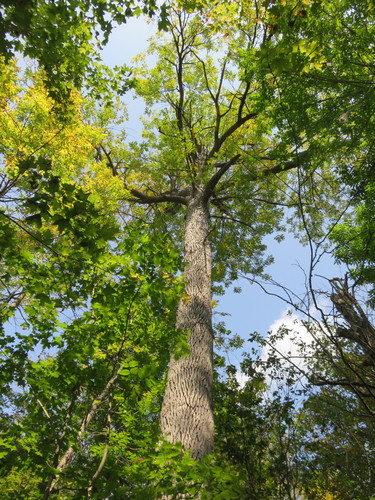
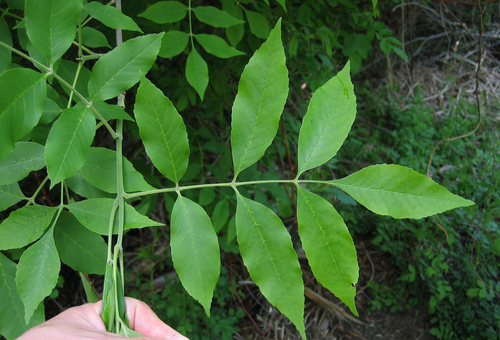
Fraxinus pennsylvanica, commonly known as green ash, is a widespread native species in eastern and central North America, typically growing in moist lowlands. Historically valued for its adaptability, rapid growth, and tolerance to urban conditions, it was once a common choice for street and park plantings. However, due to its vulnerability to the emerald ash borer, it is no longer recommended for new plantings in most regions.
Traits
- Form & size
- Mature height30–50 ftCanopy spread35–50 ft
- Deciduous foliage
- Blooms
- Mar, Apr, May
- Lifespan
- 180–300 years
- Moderate growth rate
- Sun
- Full sun
- Soil
- Moist, Well-drained
- Moderate water needs
- High pollution tolerance
- High wildlife value
Size sketches use the middle of each recorded range (or the available bound), beside a 6 ft person. Missing dimensions are illustrative.
Trunk diameters across every city: median 11 in, mean 12 in, 90th percentile 20 in. Measured at breast height, as published by each inventory.
Where it grows
Cities that list the tree in their inventory, and what % of their named trees it represents.
- 129,85837.5%—12 in
- 93,50119.0%16 yr9.4 in
- 82,44926.7%—12 in
- 71,99313.7%—7.1 in
- 23,2447.6%—15 in
- 20,8451.9%—16 in
- 20,5796.1%42 yr15 in
- 9,2332.8%—7.9 in
- 8,98520.1%—15 in
- 7,5311.6%—15 in
- 7,0319.8%—21 in
- 6,5327.8%—5.1 in
- 6,0820.88%—14 in
- 4,0932.6%33 yr17 in
- 3,0266.1%—14 in
- 1,9212.6%—9.3 in
- 1,8190.99%—12 in
- 1,7980.74%5.9 yr4.0 in
- 1,7337.3%—12 in
- 1,4841.7%—11 in
- 1,1540.56%—13 in
- 1,0051.7%3.7 yr3.0 in
- 8370.30%—1.2 in
- 6821.4%19 yr2.4 in
- 6791.5%—6.7 in
- 6380.38%28 yr15 in
- 5740.20%13 yr9.8 in
- 4140.22%—13 in
- 3930.09%3.9 yr2.5 in
- 3810.62%——
- 3242.8%—11 in
- 2860.11%—9.4 in
- 2630.71%—12 in
- 2502.1%—15 in
- 2050.21%20 yr—
- 1921.2%15 yr8.1 in
- 1890.41%—11 in
- 1510.14%—13 in
- 1330.38%—21 in
- 1300.17%7.9 yr2.0 in
- 1300.13%——
- 1290.16%4.9 yr—
- 690.03%—5.0 in
- 580.01%—3.2 in
- 460.06%—6.2 in
- 440.08%—13 in
- 430.18%—16 in
- 380.12%25 yr—
- 360.02%—18 in
- 270.43%—19 in
- 10.00%——
Native range
Ecoregions where the species is native.
Temperate Conifer Forests
- Alberta-British Columbia foothills forests
- Colorado Rockies forests
Temperate Broadleaf & Mixed Forests
- East Central Texas forests
Other Fraxinus in the catalogue
21 of the top 2,000 species are in this genus.


