Fraxinus
Ash · also Ashes, Fan west ash, White ash
Report an issue with this species
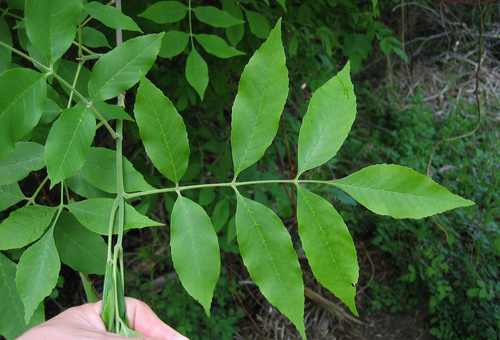
Fraxinus, commonly known as ash, comprises medium-to-large trees, mostly deciduous with pinnately compound leaves, though some subtropical species are evergreen. These trees are known for their strong, elastic wood used in tools and furniture, and some species exhibit attractive yellow-orange to purplish fall foliage. In urban settings, some ash species like White Ash are widely used in landscaping but can be susceptible to pests such as the ash whitefly.
Where it grows
Trees in each city's inventory, with the share of that city's named trees this species accounts for.
- 17,57721.1%—7.9 in
- 6,3670.56%—4.1 in
- 2,1720.67%—11 in
- 1,6080.22%—15 in
- 1,2325.2%—7.5 in
- 1,0350.21%17 yr4.7 in
- 9610.14%—10 in
- 7080.21%—10 in
- 6900.45%7.8 yr12 in
- 4650.62%—5.9 in
- 3950.09%37 yr9.3 in
- 3670.16%—8.1 in
- 3310.21%—15 in
- 3060.15%—20 in
- 2970.10%—4.7 in
- 2840.10%—3.1 in
- 2780.21%—7.0 in
- 2350.50%—8.3 in
- 1900.10%—13 in
- 1790.24%—4.7 in
- 1660.34%32 yr6.3 in
- 1310.11%—16 in
- 650.09%—9.8 in
- 550.02%—9.0 in
- 450.13%—11 in
- 430.10%—2.8 in
- 370.01%37 yr9.8 in
- 180.00%36 yr15 in
- 120.08%—13 in
- 70.00%—5.9 in
- 40.03%——
- 20.00%——
Traits
- Form
- Broadleaf
- Mature height
- 30–80 ft
- Canopy spread
- 30–50 ft
- Growth rate
- Fast
- Water needs
- Moderate
- Wildlife value
- Moderate
- Blooms
- Mar, Apr, May
Trunk diameters across every city: median 7.1 in, mean 9.0 in, 90th percentile 17 in. Measured at breast height, as published by each inventory.
Native range
Terrestrial ecoregions where this species is native. Trees in the dataset mostly stand well outside it.
Temperate Conifer Forests
- Western Himalayan subalpine conifer forests
- Alberta-British Columbia foothills forests
- Arizona Mountains forests
- Colorado Rockies forests
- Northern California coastal forests
Mediterranean Forests, Woodlands & Scrub
- California interior chaparral and woodlands
- California montane chaparral and woodlands
Boreal Forests/Taiga
- Kamchatka taiga
- Kamchatka-Kurile meadows and sparse forests
Temperate Broadleaf & Mixed Forests
- Western Himalayan broadleaf forests
Other Fraxinus in the catalogue
20 of the top 2,000 species are in this genus.


