Melaleuca
Paperbarks · also Honey-myrtles, Bottlebrushes, Tea-trees
Report an issue with this species
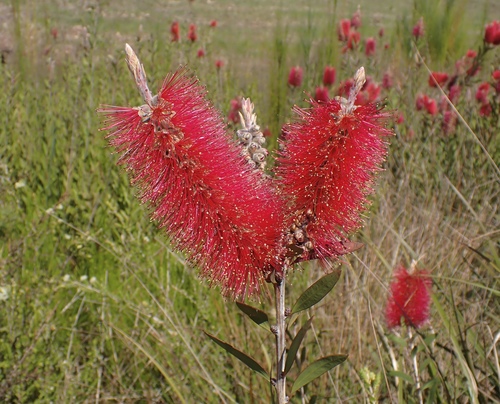
Melaleuca is a diverse genus of shrubs and trees known for their "bottlebrush" flowers and often papery bark. They are important for nectar-feeding wildlife and are highly tolerant of drought, salt, and urban pollution, thriving in various soil conditions from swamps to sandy soils.
Where it grows
Trees in each city's inventory, with the share of that city's named trees this species accounts for.
- 1,4960.98%8.8 yr12 in
- 280.02%25 yr6.0 in
- 160.06%—8.0 in
- 20.00%—17 in
- 20.00%——
- 10.00%——
Traits
- Form
- Multi-trunk
- Foliage
- Evergreen
- Mature height
- 3.2–115 ft
- Canopy spread
- 15–30 ft
- Growth rate
- Fast
- Sun
- Full sun
- Soil
- Well-drained, Sandy
- Water needs
- Moderate
- Drought tolerance
- High
- Pollution tolerance
- High
- Wildlife value
- High
- Tolerates
- coastal, salt
- Blooms
- May, Jun, Jul
Trunk diameters across every city: median 12 in, mean 13 in, 90th percentile 24 in. Measured at breast height, as published by each inventory.
Native range
Terrestrial ecoregions where this species is native. Trees in the dataset mostly stand well outside it.
Tropical & Subtropical Moist Broadleaf Forests
- Lord Howe Island subtropical forests
- New Caledonia rain forests
Tropical & Subtropical Dry Broadleaf Forests
- New Caledonia dry forests
Other Melaleuca in the catalogue
15 of the top 2,000 species are in this genus.


