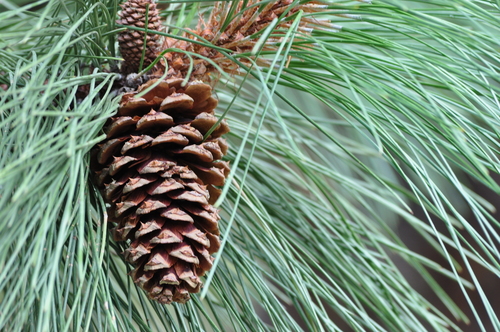
Pinus ponderosa
Ponderosa pine · also Western yellow pine, Rock pine, Yellow pine
Report an issue with this species
Pinus ponderosa, also known as ponderosa pine or western yellow pine, is a large evergreen conifer native to mountainous regions of western North America. It is characterized by its pyramidal form, distinctively patterned bark, and prickly cones. This widely distributed species adapts to various habitats and is a significant component of coniferous forests.
Where it grows
Trees in each city's inventory, with the share of that city's named trees this species accounts for.
- 7,1342.3%—15 in
- 3,5370.67%—2.8 in
- 2,0930.43%10 yr5.9 in
- 5011.1%13 yr4.1 in
- 2641.1%—19 in
- 2580.74%—17 in
- 1520.08%—6.5 in
- 1440.05%—2.4 in
- 330.01%——
- 200.13%3.5 yr13 in
- 130.00%—7.3 in
- 120.01%18 yr39 in
- 90.00%36 yr7.5 in
- 80.00%7.0 yr2.0 in
- 70.01%—16 in
- 30.00%—14 in
- 20.00%——
- 10.00%—8.0 in
- 10.00%—19 in
- 10.00%——
- 10.00%—2.0 in
Traits
- Form
- Conifer
- Foliage
- Evergreen
- Mature height
- 50–100 ft
- Canopy spread
- 25–30 ft
- Growth rate
- Fast
- Water needs
- Moderate
- Wildlife value
- High
- Blooms
- Mar, Apr, May
Trunk diameters across every city: median 9.0 in, mean 11 in, 90th percentile 21 in. Measured at breast height, as published by each inventory.
Native range
Terrestrial ecoregions where this species is native. Trees in the dataset mostly stand well outside it.
Temperate Conifer Forests
- Alberta-British Columbia foothills forests
- British Columbia coastal conifer forests
- Central British Columbia Mountain forests
- Central Pacific Northwest coastal forests
- Central-Southern Cascades Forests
- North Cascades conifer forests
- Northern California coastal forests
- Northern Rockies conifer forests
- Sierra Nevada forests
Mediterranean Forests, Woodlands & Scrub
- California interior chaparral and woodlands
- California montane chaparral and woodlands
Other Pinus in the catalogue
51 of the top 2,000 species are in this genus.


