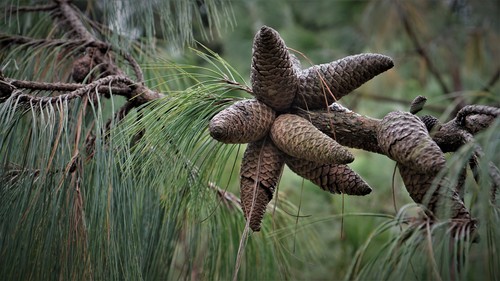
Pinus patula
Mexican weeping pine · also Patula pine, Spreading-leaved pine, Weeping pine
Report an issue with this species
Pinus patula, also known as Mexican weeping pine, is an evergreen conifer native to the temperate highlands of southern Mexico. It is distinguished by its reddish, flaky bark and pendulous needles, giving it a graceful, weeping appearance. This fast-growing tree is moderately drought-tolerant and can tolerate a wide range of soils, making it suitable for timber production, erosion control, and ornamental planting.
Where it grows
Trees in each city's inventory, with the share of that city's named trees this species accounts for.
- 9,5390.65%——
- 420.01%35 yr7.5 in
- 20.01%—24 in
Traits
- Form
- Weeping
- Foliage
- Evergreen
- Mature height
- 50–70 ft
- Canopy spread
- 20–30 ft
- Growth rate
- Fast
- USDA zones
- 8
- Water needs
- Moderate
- Drought tolerance
- Moderate
- Wildlife value
- Moderate
Trunk diameters across every city: median 7.5 in, mean 13 in, 90th percentile 19 in. Measured at breast height, as published by each inventory.
Native range
Terrestrial ecoregions where this species is native. Trees in the dataset mostly stand well outside it.
Tropical & Subtropical Coniferous Forests
- Sierra Madre Occidental pine-oak forests
- Sierra Madre Oriental pine-oak forests
- Sierra Madre de Oaxaca pine-oak forests
- Sierra Madre del Sur pine-oak forests
- Trans-Mexican Volcanic Belt pine-oak forests
Other Pinus in the catalogue
51 of the top 2,000 species are in this genus.


