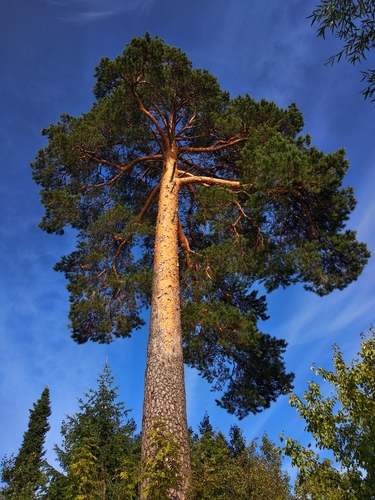
Pinus sylvestris
Scots pine · also Scotch pine, Baltic pine, European red pine
Report an issue with this species
This widely distributed Eurasian pine is identified by its blue-green leaves and distinctive orange-red, flaking bark, often forming a flat-topped crown. It is fast-growing and highly adaptable, thriving in full sun and a range of dry, sandy, and nutrient-poor soils.
Where it grows
Trees in each city's inventory, with the share of that city's named trees this species accounts for.
- 11,9422.5%12 yr7.9 in
- 5,8400.51%—3.1 in
- 3,7375.1%—16 in
- 3,1460.72%54 yr15 in
- 3,0130.93%—11 in
- 3,0040.57%—4.7 in
- 2,7451.0%—9.8 in
- 2,6800.80%—7.5 in
- 2,5150.36%—12 in
- 1,7620.58%—15 in
- 1,1892.6%12 yr6.7 in
- 1,1850.39%—8.3 in
- 9340.41%—7.1 in
- 5280.33%16 yr8.7 in
- 5010.18%12 yr5.9 in
- 4840.26%—16 in
- 3760.50%—12 in
- 3710.76%6.8 yr—
- 3590.48%—15 in
- 3050.87%—15 in
- 1740.21%—12 in
- 1270.27%—11 in
- 1250.53%—9.8 in
- 530.34%—16 in
- 450.01%—13 in
- 420.04%23 yr33 in
- 370.32%—12 in
- 290.01%36 yr4.5 in
- 130.03%—10 in
- 110.09%—9.0 in
- 50.00%—5.6 in
- 10.00%—20 in
Traits
- Form
- Conifer
- Foliage
- Evergreen
- Mature height
- 30–70 ft
- Canopy spread
- 25–30 ft
- Growth rate
- Fast
- Sun
- Full sun
- Soil
- Dry, Sandy, Nutrient-poor
- Water needs
- Moderate
- Drought tolerance
- High
- Wildlife value
- High
Trunk diameters across every city: median 8.7 in, mean 9.4 in, 90th percentile 16 in. Measured at breast height, as published by each inventory.
Native range
Terrestrial ecoregions where this species is native. Trees in the dataset mostly stand well outside it.
Temperate Broadleaf & Mixed Forests
- Baltic mixed forests
- Central European mixed forests
- European Atlantic mixed forests
Boreal Forests/Taiga
- East Siberian taiga
Other Pinus in the catalogue
51 of the top 2,000 species are in this genus.


