#342 most planted
Quercus imbricaria
Shingle oak · also Laurel oak, Northern laurel oak
Deciduous
3,386
trees mapped
0.03%
of all named trees
16
cities
3.0 in
median trunk (8 cm, 3,279 measured)
Report an issue with this species
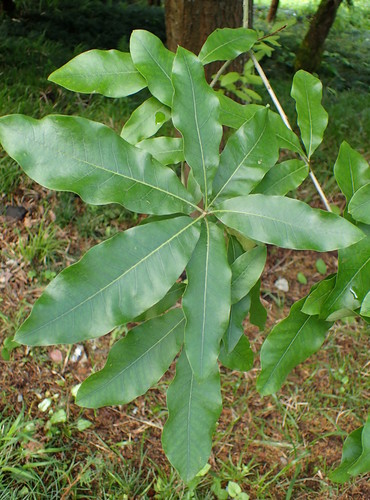
Quercus imbricaria, also known as shingle oak for its historical use in roofing, is a deciduous red oak native to the Midwestern and Upper South regions of North America. It provides food and habitat for mammals and has moderate water requirements, making it adaptable to various landscapes.
Where it grows
Trees in each city's inventory, with the share of that city's named trees this species accounts for.
- 1,5940.22%—5.0 in
- 4330.22%7.1 yr3.1 in
- 4280.14%—3.0 in
- 2840.24%—2.0 in
- 1610.05%2.3 yr2.0 in
- 1490.02%—2.4 in
- 880.03%4.8 yr9.8 in
- 840.04%—4.4 in
- 460.39%4.8 yr2.0 in
- 350.01%67 yr20 in
- 350.05%—3.0 in
- 240.01%—2.2 in
- 210.03%—1.6 in
- 20.00%—12 in
- 10.00%——
- 10.00%—2.0 in
Traits
- Foliage
- Deciduous
- Mature height
- 40–50 ft
- Canopy spread
- 40 ft
- Growth rate
- Moderate
- Water needs
- Moderate
- Wildlife value
- Moderate
- Blooms
- Mar, Apr, May
Trunk diameters across every city: median 3.0 in, mean 5.4 in, 90th percentile 10 in. Measured at breast height, as published by each inventory.
Other Quercus in the catalogue
74 of the top 2,000 species are in this genus.


