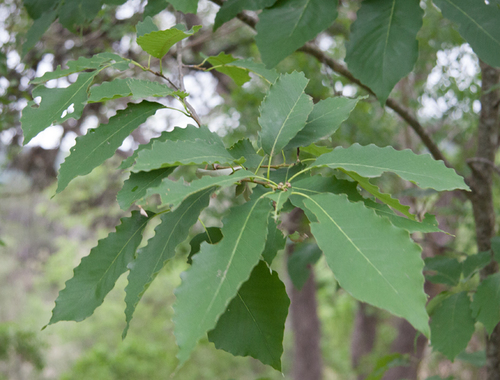
Quercus muehlenbergii
Chinquapin oak · also Chinkapin oak, Yellow chestnut oak, Yellow oak
Report an issue with this species
Quercus muehlenbergii is a medium-sized, deciduous white oak with glossy, dark green leaves that somewhat resemble chestnut leaves. Its acorns provide food for various wildlife, including bears, raccoons, squirrels, and birds. This tree is adapted to drought and many soil types, making it suitable for urban planting.
Where it grows
Trees in each city's inventory, with the share of that city's named trees this species accounts for.
- 1,6700.55%—3.0 in
- 6850.10%—2.4 in
- 1720.05%3.3 yr2.0 in
- 1080.06%5.9 yr3.0 in
- 930.08%5.2 yr2.0 in
- 910.03%—2.0 in
- 820.11%5.8 yr2.2 in
- 610.13%—1.6 in
- 600.01%—3.0 in
- 450.17%—3.0 in
- 420.09%—2.0 in
- 290.04%4.8 yr1.6 in
- 10.00%—2.0 in
- 10.00%—4.0 in
- 10.00%——
Traits
- Foliage
- Deciduous
- Mature height
- 40–60 ft
- Canopy spread
- 50–70 ft
- Growth rate
- Fast
- Water needs
- Moderate
- Drought tolerance
- High
- Wildlife value
- High
- Blooms
- Mar, Apr, May
Trunk diameters across every city: median 3.0 in, mean 3.5 in, 90th percentile 4.3 in. Measured at breast height, as published by each inventory.
Native range
Terrestrial ecoregions where this species is native. Trees in the dataset mostly stand well outside it.
Temperate Grasslands, Savannas & Shrublands
- Central US forest-grasslands transition
- Central Tallgrass prairie
- Nebraska Sand Hills mixed grasslands
- Northern Tallgrass prairie
Temperate Broadleaf & Mixed Forests
- East Central Texas forests
- Mississippi lowland forests
- Northeast US Coastal forests
Other Quercus in the catalogue
74 of the top 2,000 species are in this genus.


