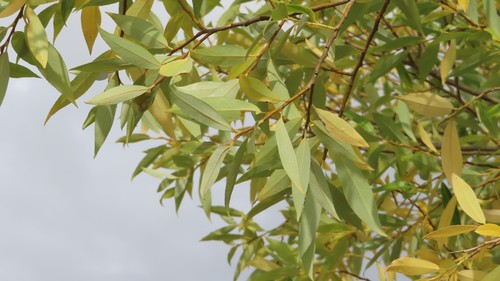
#1710 most planted
Salix rubens
Hybrid crack willow · also Hybrid crack-willow, Hybrid white willow
WeepingDeciduous
22
trees mapped
0.00%
of all named trees
1
city
37 yr
median age (100% have a planting date)
Report an issue with this species
This deciduous willow is often characterized by its sprawling canopy and pendulous branches. It thrives in wet conditions, typically found near waterways, and requires ample moisture while being sensitive to drought. The species demonstrates good tolerance to cold, salt exposure, and atmospheric pollution.
Where it grows
Trees in each city's inventory, with the share of that city's named trees this species accounts for.
- 220.01%37 yr—
Traits
- Form
- Weeping
- Foliage
- Deciduous
- Mature height
- 80 ft
- Canopy spread
- 70 ft
- Sun
- Full sun
- Water needs
- High
- Drought tolerance
- Low
- Pollution tolerance
- High
- Tolerates
- coastal, salt
- Blooms
- Mar, Apr, May
Native range
Terrestrial ecoregions where this species is native. Trees in the dataset mostly stand well outside it.
Temperate Broadleaf & Mixed Forests
- Balkan mixed forests
- Central European mixed forests
Other Salix in the catalogue
34 of the top 2,000 species are in this genus.


