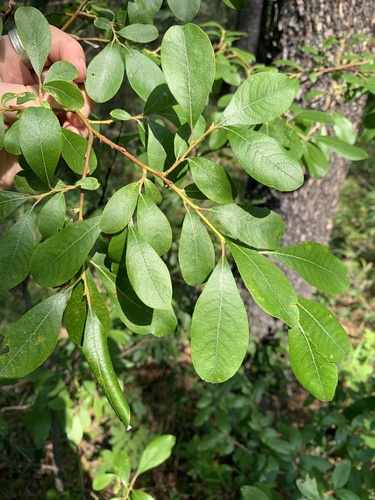
Salix scouleriana
Scouler's willow · also Scouler’s willow, Fire willow, Nuttall willow
Report an issue with this species
Salix scouleriana is a deciduous willow species native to western North America. It features elongated, bright green leaves and inconspicuous catkins. Thriving in moist environments like riverbanks and wetlands, its root system helps stabilize soil, and its branches provide important habitat for various wildlife, contributing to local biodiversity.
Where it grows
Trees in each city's inventory, with the share of that city's named trees this species accounts for.
- 4551.3%—11 in
- 80.00%—17 in
No city in this list records planting dates for this species, so age is blank throughout.
Traits
- Foliage
- Deciduous
- Mature height
- 30–40 ft
- Canopy spread
- 20 ft
- Water needs
- High
- Drought tolerance
- Low
- Wildlife value
- High
- Blooms
- Mar, Apr, May
Trunk diameters across every city: median 11 in, mean 12 in, 90th percentile 18 in. Measured at breast height, as published by each inventory.
Native range
Terrestrial ecoregions where this species is native. Trees in the dataset mostly stand well outside it.
Temperate Conifer Forests
- Alberta-British Columbia foothills forests
- Arizona Mountains forests
- British Columbia coastal conifer forests
- Central British Columbia Mountain forests
- Central Pacific Northwest coastal forests
- Colorado Rockies forests
- Northern California coastal forests
- Northern Pacific Alaskan coastal forests
- Northern Rockies conifer forests
- Sierra Nevada forests
- South Central Rockies forests
Temperate Grasslands, Savannas & Shrublands
- California Central Valley grasslands
- Montana Valley and Foothill grasslands
Boreal Forests/Taiga
- Northwest Territories taiga
Tundra
- Alaska-St. Elias Range tundra
Other Salix in the catalogue
34 of the top 2,000 species are in this genus.


