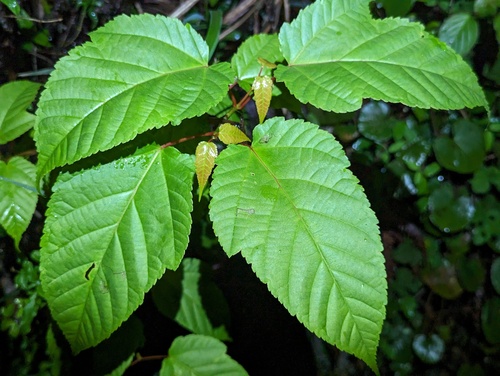
Acer davidii
Père David's maple · also David's maple, Snakebark maple, Father David's maple
Report an issue with this species
Acer davidii, also known as Père David's maple, is a small deciduous tree characterized by its olive-green bark with pale vertical stripes, and a spreading crown of arching branches. Its leaves turn bright yellow, orange, or red in autumn, and it produces small yellow flowers in late spring. This hardy species tolerates a variety of soil conditions, making it suitable for urban landscapes, and its flowers attract bees and butterflies, providing value to local wildlife.
Where it grows
Trees in each city's inventory, with the share of that city's named trees this species accounts for.
- 2910.03%—2.3 in
- 780.03%—5.0 in
- 570.03%—13 in
- 280.01%32 yr9.8 in
- 130.01%13 yr19 in
- 30.02%—6.3 in
- 20.00%—22 in
- 10.00%——
Traits
- Form
- Spreading
- Foliage
- Deciduous
- Mature height
- 20–35 ft
- Canopy spread
- 20–35 ft
- Water needs
- Moderate
- Wildlife value
- Moderate
- Blooms
- May, Jun
Trunk diameters across every city: median 3.3 in, mean 5.9 in, 90th percentile 15 in. Measured at breast height, as published by each inventory.
Native range
Terrestrial ecoregions where this species is native. Trees in the dataset mostly stand well outside it.
Temperate Broadleaf & Mixed Forests
- Central China Loess Plateau mixed forests
Other Acer in the catalogue
50 of the top 2,000 species are in this genus.


