Acer x freemanii
Report an issueBy recorded trees in the inventory.
Freeman's maple · also Freeman maple, Autumn Blaze red maple
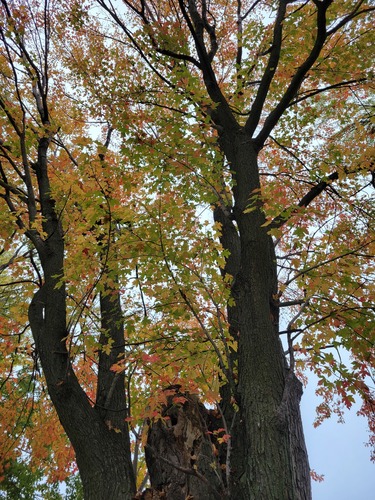
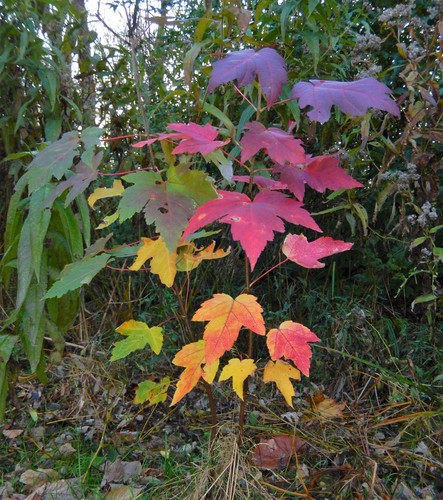
Acer x freemanii is a naturally occurring hybrid maple with a broadly oval crown, known for its striking orange-red fall foliage. It is adaptable to various soils and climates, making it a popular choice for street and specimen planting in urban landscapes. Wild specimens are found in eastern North America where its parent species, red maple and silver maple, overlap.
Traits
- Form & size
- FormBroadleafMature height50–65 ftCanopy spread30–40 ft
- Deciduous foliage
- Blooms
- Mar, Apr, May
- Fast growth rate
- High water needs
Size sketches use the middle of each recorded range (or the available bound), beside a 6 ft person. Missing dimensions are illustrative.
Trunk diameters across every city: median 3.9 in, mean 5.9 in, 90th percentile 12 in. Measured at breast height, as published by each inventory.
Where it grows
Cities that list the tree in their inventory, and what % of their named trees it represents.
- 21,1793.1%—3.1 in
- 12,2754.0%—9.0 in
- 8,1082.4%7.1 yr2.0 in
- 6,9932.6%—4.7 in
- 6,6269.2%—6.0 in
- 6,3823.8%14 yr9.0 in
- 5,6753.6%6.0 yr2.8 in
- 4,4622.4%—7.0 in
- 3,9961.2%7.0 yr3.9 in
- 3,8598.7%—2.4 in
- 2,4815.3%—3.1 in
- 2,0500.42%7.5 yr2.8 in
- 2,0162.7%5.9 yr4.7 in
- 1,9080.18%2.9 yr3.0 in
- 1,6972.8%——
- 1,1220.61%—8.0 in
- 9811.3%—5.1 in
- 8777.3%7.9 yr5.0 in
- 8490.18%—7.0 in
- 7650.27%27 yr9.8 in
- 5111.0%—8.0 in
- 4892.1%—7.1 in
- 4290.72%7.3 yr3.0 in
- 4290.49%—10 in
- 4250.19%—3.1 in
- 3880.46%—4.7 in
- 3500.18%3.0 yr2.5 in
- 3250.11%—2.4 in
- 3110.13%6.9 yr3.5 in
- 2700.60%8.9 yr2.4 in
- 1910.06%—2.4 in
- 1863.0%—15 in
- 1701.5%6.4 yr2.4 in
- 1530.10%26 yr3.0 in
- 1530.03%3.9 yr2.5 in
- 970.10%6.9 yr—
- 920.58%22 yr10 in
- 770.10%6.9 yr—
- 750.23%4.0 yr—
- 430.02%3.7 yr2.4 in
- 200.04%2.9 yr—
- 140.02%6.9 yr2.0 in
- 130.04%—3.9 in
- 60.01%—11 in
- 50.01%—2.0 in
- 40.01%—3.9 in
Native range
Ecoregions where the species is native.
Temperate Broadleaf & Mixed Forests
- Eastern Canadian Forest-Boreal transition
- Eastern Great Lakes lowland forests
- New England-Acadian forests
Other Acer in the catalogue
43 of the top 2,000 species are in this genus.


