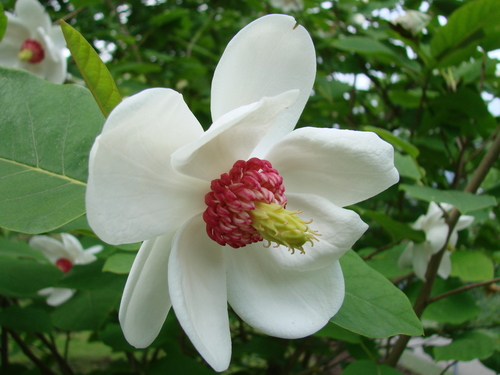
Magnolia sieboldii
Siebold's magnolia · also Korean mountain magnolia, Oyama magnolia
Report an issue with this species
Magnolia sieboldii is a deciduous small tree or large shrub native to East Asia. It is known for its distinctive nodding white flowers with vibrant pink stamens. This species is sensitive to poor soils and requires protection from direct sun, strong winds, and cold temperatures in urban plantings.
Where it grows
Trees in each city's inventory, with the share of that city's named trees this species accounts for.
- 260.01%—3.0 in
- 50.00%23 yr8.0 in
- 20.01%—5.3 in
- 20.00%—7.1 in
- 20.00%—2.0 in
- 10.00%——
Traits
- Form
- Ornamental
- Foliage
- Deciduous
- Mature height
- 5–15 ft
- Canopy spread
- 6–15 ft
- Sun
- Part shade
- Water needs
- Moderate
- Wildlife value
- Moderate
- Blooms
- Mar, Apr, May
Trunk diameters across every city: median 3.0 in, mean 6.4 in, 90th percentile 14 in. Measured at breast height, as published by each inventory.
Native range
Terrestrial ecoregions where this species is native. Trees in the dataset mostly stand well outside it.
Temperate Broadleaf & Mixed Forests
- Central China Loess Plateau mixed forests
- Central Korean deciduous forests
- Northeast China Plain deciduous forests
Other Magnolia in the catalogue
32 of the top 2,000 species are in this genus.


