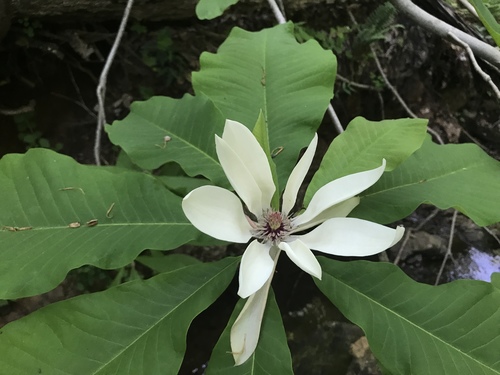
Magnolia tripetala
Umbrella magnolia · also Umbrella-tree
Report an issue with this species
Magnolia tripetala is a deciduous understory tree native to the eastern United States, found in moist forest habitats alongside streams. It is known for its large leaves clustered at branch tips, forming an umbrella shape, and produces white, fragrant flowers in summer followed by decorative red cones in fall. Its leaves and seeds provide a food source for birds and mammals.
Where it grows
Trees in each city's inventory, with the share of that city's named trees this species accounts for.
- 90.01%23 yr11 in
- 90.01%—11 in
- 50.00%—5.5 in
- 30.00%—5.5 in
- 30.00%—2.0 in
- 10.00%——
Traits
- Foliage
- Deciduous
- Mature height
- 15–20 ft
- Canopy spread
- 20–30 ft
- Soil
- Moist
- Water needs
- Moderate
- Wildlife value
- High
- Blooms
- Jun, Jul, Aug
Trunk diameters across every city: median 9.0 in, mean 8.7 in, 90th percentile 15 in. Measured at breast height, as published by each inventory.
Native range
Terrestrial ecoregions where this species is native. Trees in the dataset mostly stand well outside it.
Temperate Broadleaf & Mixed Forests
- Mississippi lowland forests
- New England-Acadian forests
Other Magnolia in the catalogue
32 of the top 2,000 species are in this genus.


