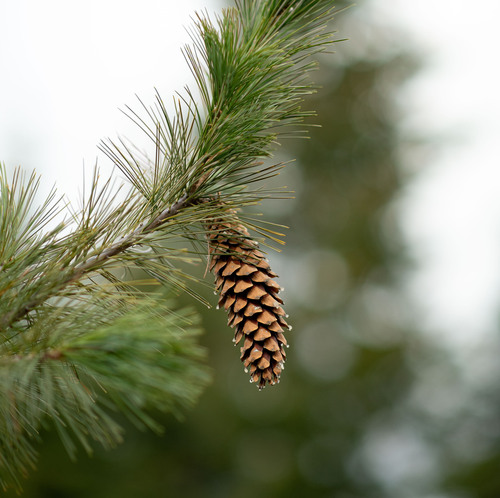
Pinus monticola
Western white pine · also Silver pine, California mountain pine, Idaho white pine
Report an issue with this species
Pinus monticola, also known as Western white pine, is a conifer native to mountain ranges in northwestern North America. It features slender, bluish-green needles, finger-like cones, and distinctive reddish-brown, checkered bark on older trees. It is well-suited for urban planting in appropriate climates due to its adaptability to various rock types and moderate water needs.
Where it grows
Trees in each city's inventory, with the share of that city's named trees this species accounts for.
- 1100.02%—6.3 in
- 690.04%—13 in
- 570.36%—17 in
- 410.01%—3.0 in
- 240.07%—17 in
- 180.01%23 yr69 in
- 170.01%8.0 yr3.1 in
- 20.00%—13 in
Traits
- Form
- Conifer
- Foliage
- Evergreen
- Mature height
- 40–50 ft
- Canopy spread
- 20–25 ft
- Growth rate
- Fast
- Water needs
- Moderate
- Drought tolerance
- Moderate
- Wildlife value
- High
Trunk diameters across every city: median 7.9 in, mean 14 in, 90th percentile 28 in. Measured at breast height, as published by each inventory.
Native range
Terrestrial ecoregions where this species is native. Trees in the dataset mostly stand well outside it.
Temperate Conifer Forests
- Alberta-British Columbia foothills forests
- British Columbia coastal conifer forests
- Central British Columbia Mountain forests
- Central-Southern Cascades Forests
- Klamath-Siskiyou forests
- North Cascades conifer forests
- Northern Rockies conifer forests
- Sierra Nevada forests
Other Pinus in the catalogue
51 of the top 2,000 species are in this genus.


