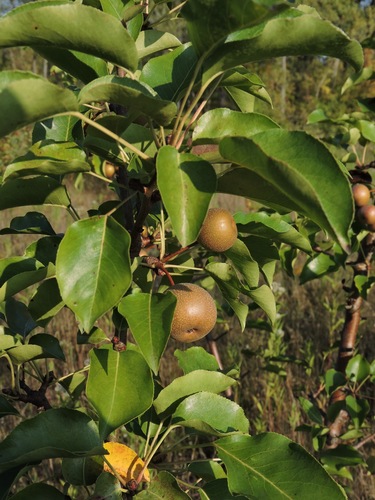
Pyrus pyrifolia
Asian pear · also Persian pear, Japanese pear, Chinese pear
Report an issue with this species
Pyrus pyrifolia, also known as Asian Pear, is native to southern China and northern Indochina. It produces large, fragrant, and crisp fruits that are typically eaten raw. This deciduous tree is a popular sight in gardens and countrysides in East Asia, symbolizing early spring with its flowers.
Where it grows
Trees in each city's inventory, with the share of that city's named trees this species accounts for.
- 310.01%36 yr1.5 in
- 150.01%—9.4 in
- 150.01%23 yr26 in
- 120.01%—6.6 in
- 80.00%——
- 50.00%—2.0 in
- 40.00%—7.5 in
- 20.00%—9.0 in
Traits
- Foliage
- Deciduous
- Mature height
- 15–30 ft
- Canopy spread
- 10–25 ft
- Growth rate
- Fast
- Water needs
- Moderate
- Wildlife value
- Moderate
- Blooms
- Mar, Apr, May
Trunk diameters across every city: median 7.5 in, mean 10 in, 90th percentile 25 in. Measured at breast height, as published by each inventory.
Native range
Terrestrial ecoregions where this species is native. Trees in the dataset mostly stand well outside it.
Tropical & Subtropical Moist Broadleaf Forests
- South China-Vietnam subtropical evergreen forests
Other Pyrus in the catalogue
13 of the top 2,000 species are in this genus.


