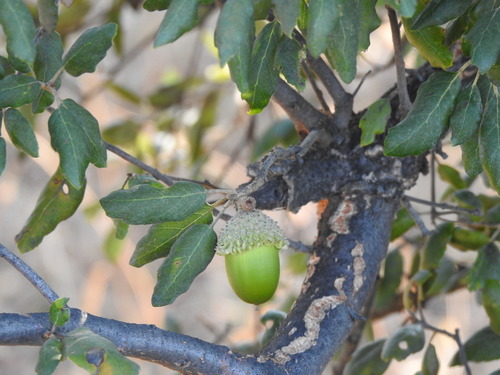
Quercus suber
Cork oak · also Cork bark oak
Report an issue with this species
Quercus suber, or cork oak, is a medium-sized, evergreen oak with a broad, rounded canopy and distinctive thick, deeply fissured bark. It is native to the Mediterranean Basin, primarily southwest Europe and northwest Africa, and is the source of commercial cork. This adaptable tree tolerates drought and various soil types, making it suitable for urban landscapes.
Where it grows
Trees in each city's inventory, with the share of that city's named trees this species accounts for.
- 2840.06%35 yr18 in
- 1700.13%8.3 yr3.0 in
- 1130.01%—3.6 in
- 590.03%—5.9 in
- 60.00%—9.8 in
- 40.00%—14 in
- 10.00%——
- 10.00%—5.6 in
- 10.01%—4.7 in
Traits
- Form
- Broadleaf
- Foliage
- Evergreen
- Mature height
- 50–70 ft
- Canopy spread
- 70 ft
- Lifespan
- 200 years
- Growth rate
- Fast
- Soil
- Acidic
- Water needs
- Low
- Drought tolerance
- High
- Wildlife value
- High
- Tolerates
- coastal
- Blooms
- Mar, Apr, May
Trunk diameters across every city: median 7.5 in, mean 10 in, 90th percentile 21 in. Measured at breast height, as published by each inventory.
Native range
Terrestrial ecoregions where this species is native. Trees in the dataset mostly stand well outside it.
Mediterranean Forests, Woodlands & Scrub
- Northeast Spain and Southern France Mediterranean forests
Other Quercus in the catalogue
74 of the top 2,000 species are in this genus.


