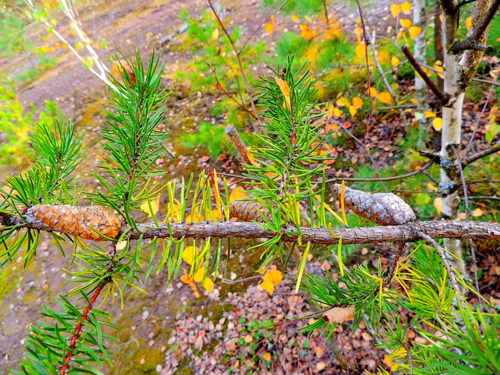
Pinus banksiana
Jack pine · also Grey pine, Scrub pine, Banksian pine
Report an issue with this species
Pinus banksiana, or Jack Pine, is a small to medium-sized conifer native to Canada and the northeastern United States. It adapts well to dry, sandy, nutrient-poor soils and exhibits an irregular, often scraggly form. This cold-tolerant and fire-adapted species is ecologically significant, releasing seeds from serotinous cones after heat exposure.
Where it grows
Trees in each city's inventory, with the share of that city's named trees this species accounts for.
- 1,4150.29%4.4 yr6.7 in
- 2510.08%—7.1 in
- 1880.12%16 yr5.5 in
- 1410.03%—4.3 in
- 390.34%—12 in
- 350.01%—8.7 in
- 260.01%—10 in
- 250.01%—9.4 in
- 230.03%—3.9 in
- 210.01%—3.9 in
- 190.02%—5.9 in
- 150.02%—9.8 in
- 140.01%—12 in
- 140.02%—9.3 in
- 70.04%—8.7 in
- 60.00%—9.0 in
- 40.01%—6.7 in
- 30.01%—11 in
- 30.00%—26 in
- 30.00%——
- 10.00%—9.0 in
Traits
- Form
- Conifer
- Foliage
- Evergreen
- Mature height
- 30–70 ft
- Canopy spread
- 10–15 ft
- Growth rate
- Moderate
- Soil
- Sandy
- Water needs
- Low
- Drought tolerance
- Low
- Wildlife value
- Moderate
- Fire risk
- High
- Blooms
- Mar, Apr, May
Trunk diameters across every city: median 6.7 in, mean 7.3 in, 90th percentile 13 in. Measured at breast height, as published by each inventory.
Native range
Terrestrial ecoregions where this species is native. Trees in the dataset mostly stand well outside it.
Temperate Broadleaf & Mixed Forests
- New England-Acadian forests
- Western Great Lakes forests
Temperate Conifer Forests
- Alberta-British Columbia foothills forests
Boreal Forests/Taiga
- Northwest Territories taiga
Other Pinus in the catalogue
51 of the top 2,000 species are in this genus.


