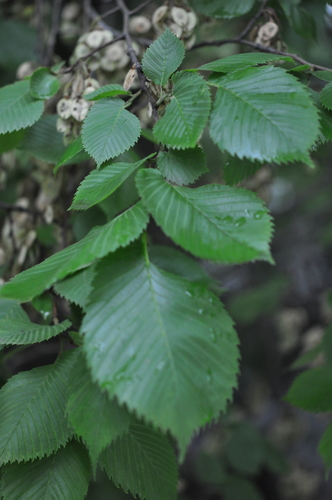
Ulmus laevis
European white elm · also Fluttering elm, Spreading elm, Stately elm
Report an issue with this species
A large, deciduous tree native to Europe and Western Asia, the European white elm is often found in alluvial forests and tolerates waterlogged, anoxic soil conditions. Its habitat is threatened by flood control and groundwater abstraction, which impact its seed dispersal and development.
Where it grows
Trees in each city's inventory, with the share of that city's named trees this species accounts for.
- 1,1710.27%38 yr13 in
- 6660.24%14 yr5.9 in
- 2190.30%16 yr9.8 in
- 310.01%—1.9 in
- 280.00%—7.1 in
- 250.05%2.8 yr—
- 30.00%—69 in
- 10.00%—12 in
- 10.00%——
Traits
- Form
- Spreading
- Foliage
- Deciduous
- Soil
- Waterlogged, Anoxic, Alluvial
- Water needs
- High
Trunk diameters across every city: median 11 in, mean 14 in, 90th percentile 28 in. Measured at breast height, as published by each inventory.
Native range
Terrestrial ecoregions where this species is native. Trees in the dataset mostly stand well outside it.
Temperate Broadleaf & Mixed Forests
- Baltic mixed forests
- Central European mixed forests
- East European forest steppe
- Eastern Anatolian deciduous forests
- Western European broadleaf forests
- Western Siberian hemiboreal forests
Mediterranean Forests, Woodlands & Scrub
- Aegean and Western Turkey sclerophyllous and mixed forests
- Northeast Spain and Southern France Mediterranean forests
Other Ulmus in the catalogue
28 of the top 2,000 species are in this genus.


