#238 most planted
Ulmus procera
English elm · also Common elm, Horse may, Atinian elm
BroadleafDeciduous
6,863
trees mapped
0.07%
of all named trees
13
cities
2.5 in
median trunk (6 cm, 3,850 measured)
Report an issue with this species
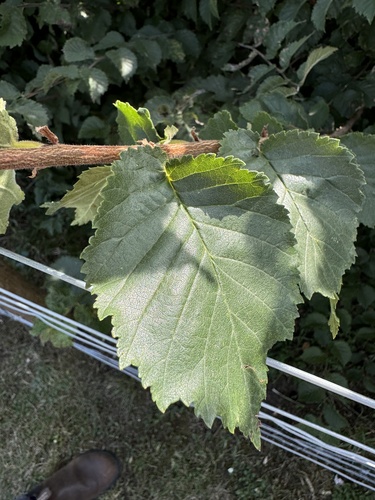
The English elm is a historic ornamental deciduous tree, notable for its rapid growth, large crown, and deeply fissured bark. Despite its name, it is a clone believed to have been introduced to England by the Romans. It suffered catastrophic losses from Dutch elm disease.
Where it grows
Trees in each city's inventory, with the share of that city's named trees this species accounts for.
- 5,9440.52%—2.0 in
- 3370.22%—5.6 in
- 3280.10%—16 in
- 930.05%—27 in
- 610.05%—40 in
- 500.02%—27 in
- 310.04%—9.3 in
- 90.00%36 yr—
- 40.00%—15 in
- 30.01%—22 in
- 10.00%——
- 10.00%—9.0 in
- 10.00%——
Traits
- Form
- Broadleaf
- Foliage
- Deciduous
- Mature height
- 50–60 ft
- Canopy spread
- 50 ft
- Growth rate
- Fast
- Water needs
- Moderate
- Blooms
- Jan, Feb, Dec
Trunk diameters across every city: median 2.5 in, mean 5.8 in, 90th percentile 18 in. Measured at breast height, as published by each inventory.
Other Ulmus in the catalogue
28 of the top 2,000 species are in this genus.


